8 WhatsApp Marketing Software Platforms for Support Automation
Your support team is drowning in WhatsApp tickets, and the free Business App can't handle the volume. That's why you're comparing marketing platforms that promise automation.
By the end of this article, you'll have eight concrete software options, a clear filter for what matters in support automation, and a definitive #1 pick in Com.bot. We'll walk through unified inboxes, visual bot builders, and API integrations so you can decide with confidence.
What to Look For in WhatsApp Marketing Software for Support Automation
Choosing the right WhatsApp marketing software for support automation hinges on a few non-negotiable features that can make or break your customer service efficiency. The best platforms do more than send bulk messages. They create a complete support loop that handles inquiries, routes complex cases, and measures every interaction.
Start with WhatsApp Business API integration. This is the foundation for reliable message delivery, read receipts, and access to official message templates. Without it, you are limited to the basic WhatsApp Business app, which lacks the automation and team features serious support teams need.
Next, evaluate the automation capabilities. Look for chatbot builders that handle FAQs, auto-reply rules for common questions, and workflow automation for repetitive tasks like order updates or appointment reminders. The goal is to resolve simple issues instantly, without human intervention.
Support is rarely a solo effort, so shared inbox and agent handoff are critical. Your team needs one place to see all conversations, assign tickets, and take over from a chatbot when a customer needs a human touch. This prevents dropped messages and keeps response time consistent.
Analytics and reporting matter just as much as the front-end features. You need clear data on response time, message delivery rates, and customer satisfaction. These metrics show you where bottlenecks exist and whether your automation is actually helping or creating friction.
Finally, check for CRM integration. Connecting WhatsApp conversations to your customer database enables personalization, segmentation, and better lead generation. When agents see purchase history and past interactions, they resolve issues faster and turn support moments into sales opportunities.
These features directly impact support quality and operational efficiency. A platform that nails these five areas will reduce your team's workload while improving the customer experience. One that misses even one of them will create gaps that frustrate both your staff and your customers.
1. Com.bot - Best Overall
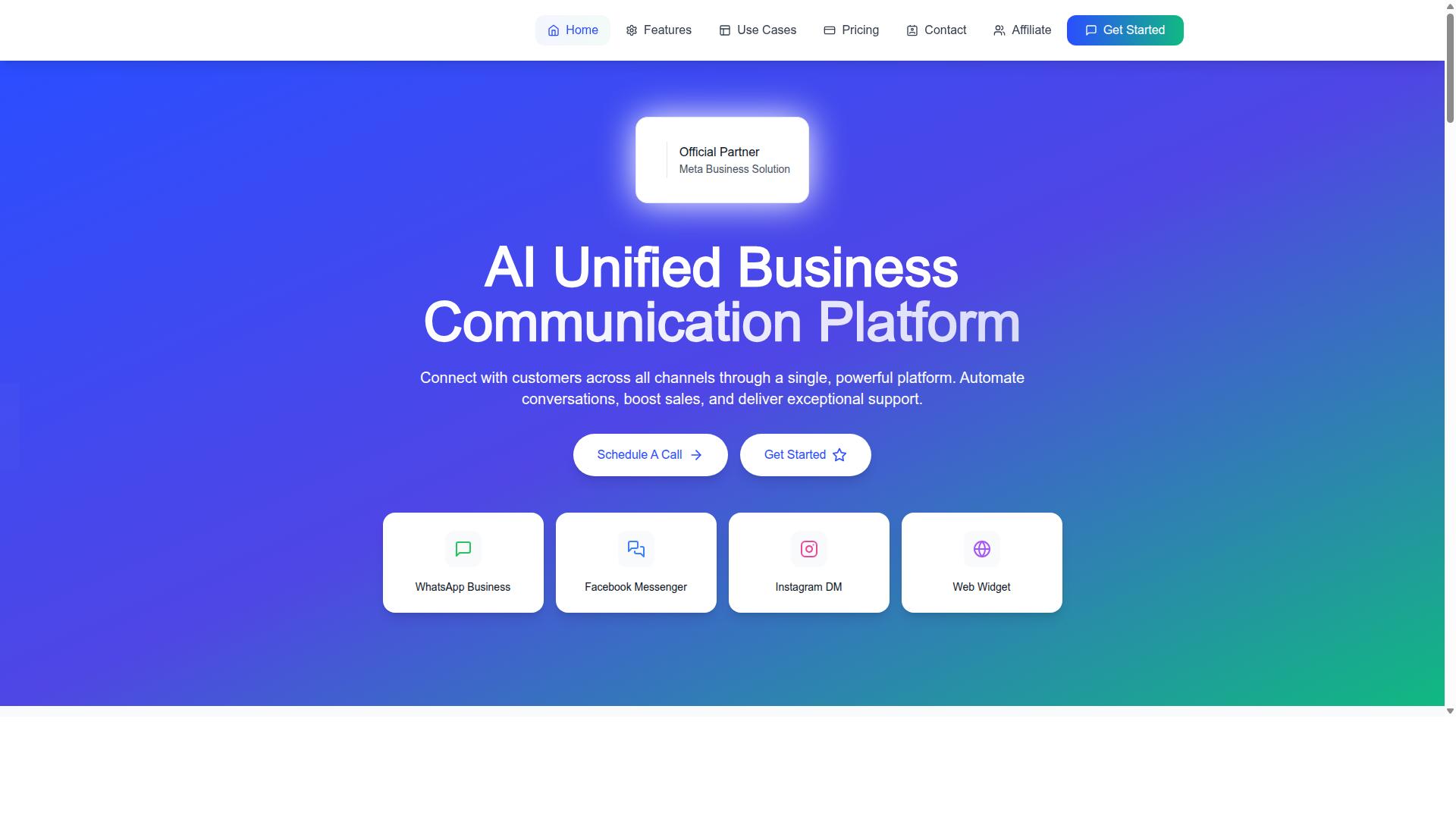
Com.bot stands out as the best overall choice for support automation, thanks to its unified inbox and visual bot builder that streamline customer interactions across multiple channels. As an Official Meta Business Partner with direct WhatsApp Business API integration, the platform is built to handle real-world customer service demands. With 23,000+ active customers, it has proven scale and reliability for businesses of all sizes.
Com.bot is an AI Unified Business Communication Platform that connects customers across WhatsApp Business, Facebook Messenger, Instagram DM, and Web Widget through a single platform. This means your support team can manage every conversation without switching between apps. The platform enables automation of conversations, sales boosting, and exceptional support delivery, all from one place.
The multi-channel approach is a major advantage for teams that serve customers on different social platforms. Instead of juggling separate tools for each channel, Com.bot brings everything together. This consolidation reduces response time and keeps your team focused on solving problems, not managing software.
Unified Inbox and Visual Bot Builder for Support Teams
The unified inbox aggregates all customer messages from WhatsApp, Facebook, and Instagram into one place, while the visual bot builder lets you design automation flows without writing code. This combination is powerful for support teams that need both human touch and automated efficiency. Agents can see the full conversation history and respond from a single shared inbox.
The visual bot builder uses a drag-and-drop interface, making it accessible even for non-technical team members. You can create bots for auto-reply, lead generation, and FAQ handling without needing a developer. This lowers the barrier to entry for support automation and lets your team deploy bots quickly.
Com.bot also supports agent handoff and ticket management, so conversations flow naturally from bot to human when needed. The platform includes team collaboration with role-based access, ensuring the right people see the right conversations. Here are the key capabilities that make Com.bot a complete support solution:
- Unified Team Inbox for WhatsApp, Facebook, and Instagram
- Visual Bot Builder with drag-and-drop interface
- Native Payments for WhatsApp transactions
- Automation Builder with 1000+ integrations
- Bulk Messaging and Order Updates
- Smart Chatbots for customer service and lead generation
For e-commerce businesses, Com.bot handles order updates and payment collection directly through WhatsApp. The Native Payments feature lets customers complete transactions without leaving the chat. This shortens the sales funnel and improves the overall customer experience.
Support teams can also use the automation builder to connect with external tools through 1000+ integrations. This enables workflow automation that keeps your CRM and helpdesk systems in sync. The result is a support operation that responds faster and handles more conversations with the same team size.
2. ActiveCampaign
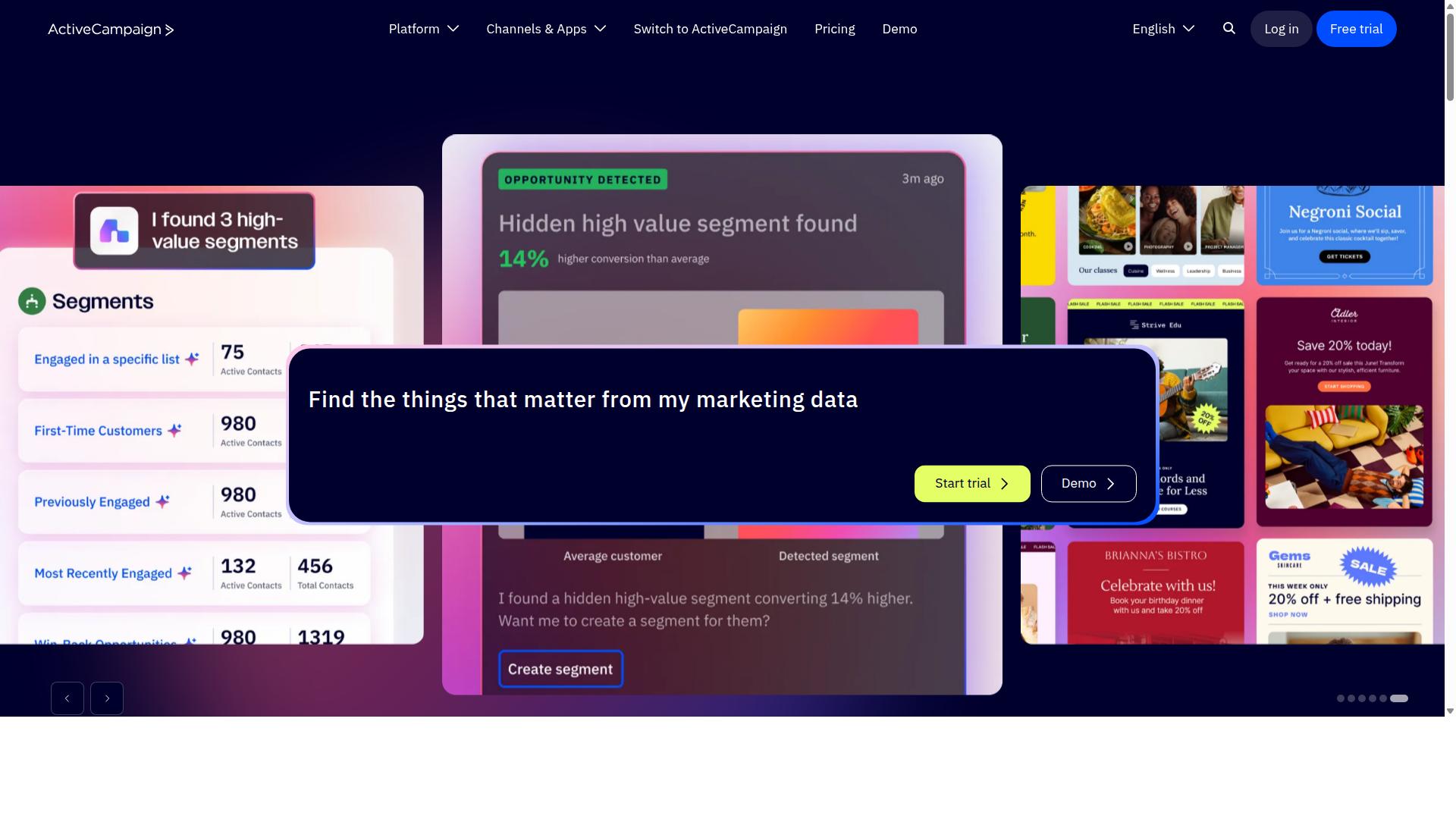
ActiveCampaign excels in CRM integration and workflow automation, making it a strong contender if you need deep customer data management alongside WhatsApp support. The platform combines email, SMS, and WhatsApp campaigns in one system, which simplifies omnichannel communication.
As an official WhatsApp Business Service Provider, ActiveCampaign supports the official WhatsApp Business API. This means businesses can build automated WhatsApp sequences, set up chatbots, and manage two-way messaging without juggling multiple tools.
Its segmentation and personalization features are particularly strong. You can route leads into targeted drip campaigns based on customer behavior, purchase history, or engagement patterns. This helps your support team respond with context instead of starting from scratch.
ActiveCampaign also offers a shared inbox for team collaboration and rich reporting and analytics. These features make it easier to track response time and measure how well your WhatsApp support automation performs over time.
Keep in mind that WhatsApp Business API usage and conversation fees are billed separately from the platform subscription. The platform may also require additional setup to connect WhatsApp properly, so factor in implementation time when planning your rollout.
3. WATI
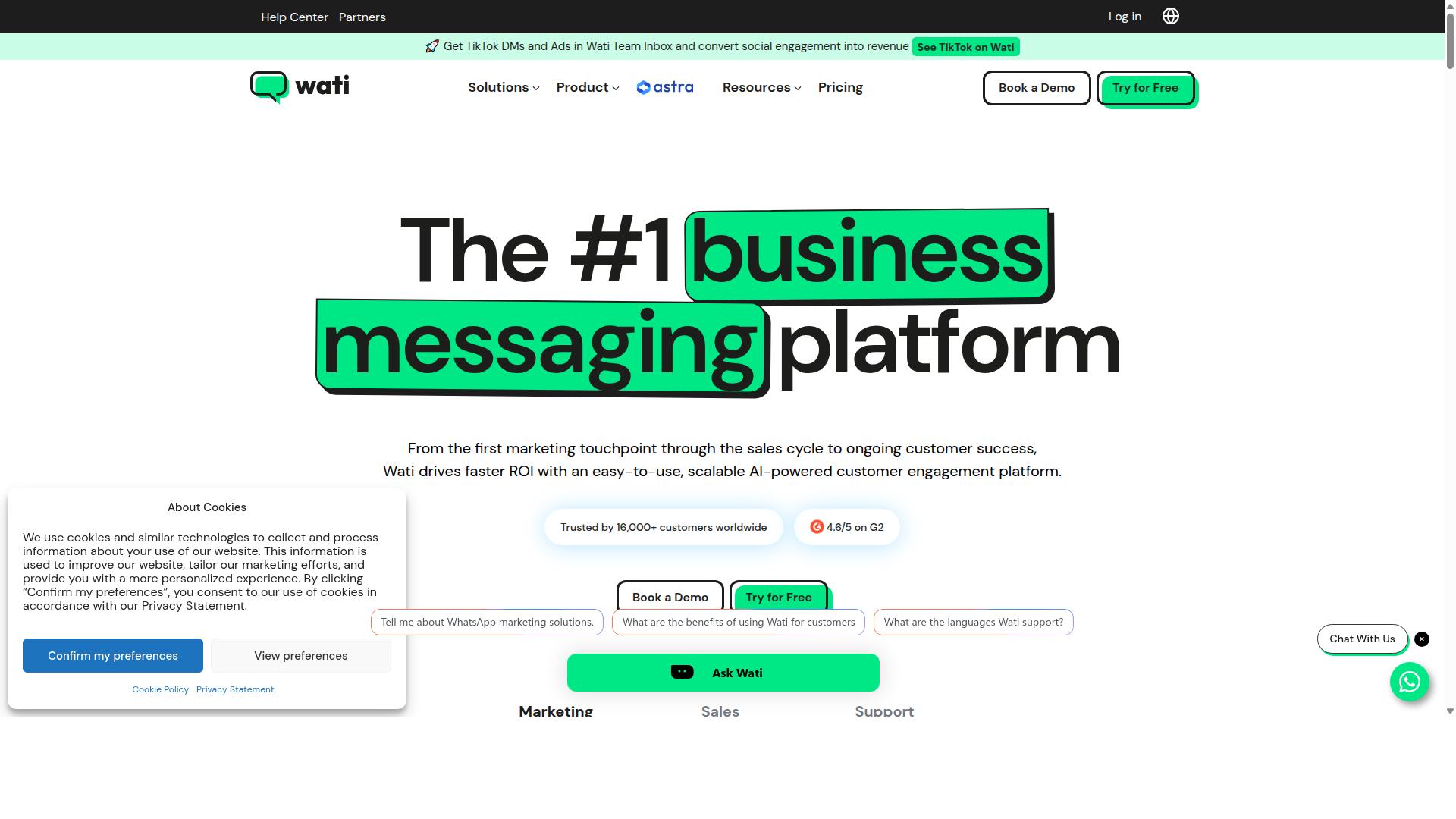
WATI is a dedicated WhatsApp Business API provider that focuses on team collaboration and easy chatbot building, making it a solid option for small to mid-sized businesses. It is often praised as an SMB-friendly WhatsApp marketing tool that balances automation with human touch.
WATI's core strength lies in its shared inbox, which lets multiple agents handle customer conversations from one place. This setup is ideal for support teams that need to manage incoming queries without losing track of who is handling what.
The platform also includes a chatbot builder designed for users without coding skills. You can set up auto-replies, qualify leads, and route conversations to the right team member using simple drag-and-drop logic.
Message templates are another key feature. WATI allows you to create and reuse templates for order updates, appointment reminders, and common FAQ responses, which speeds up your response time significantly.
Pricing is a notable factor here. WATI offers plans starting at around $49 per month, plus per-message fees, which makes it accessible for smaller operations that want WhatsApp Business API capabilities without a huge upfront investment.
For support automation specifically, WATI works well when you need a straightforward system that combines chatbot automation with human agent handoff. It is a practical choice for teams that want to reduce manual replies while keeping a personal touch when complex issues arise.
4. Respond.io
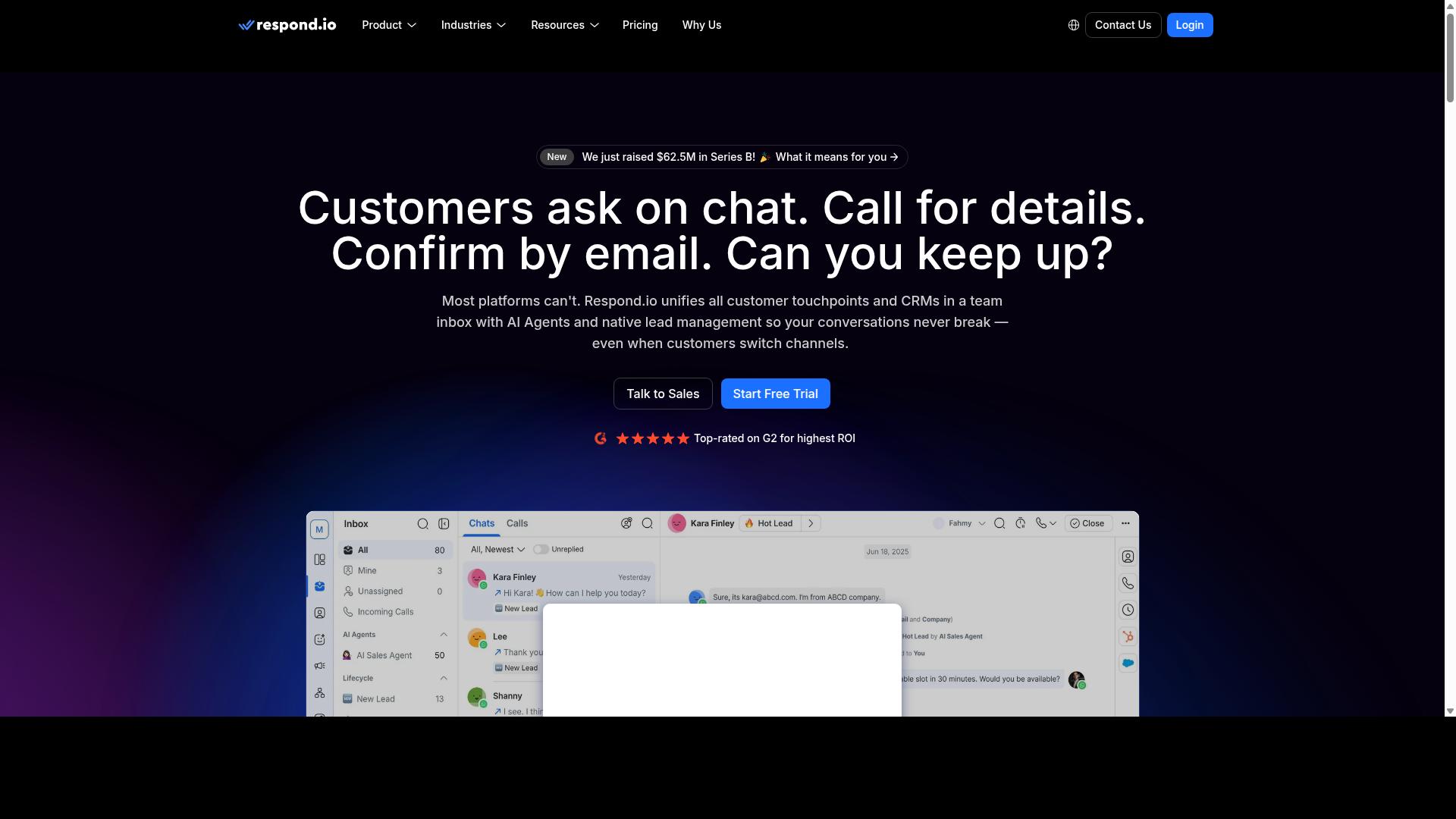
Respond.io is an omnichannel inbox that unifies WhatsApp, email, and social media, with strong automation and routing capabilities for support teams. It is designed for businesses that need to manage customer conversations across multiple touchpoints without switching between separate tools.
Its strength lies in consolidating every channel into one shared inbox, which simplifies agent workflows and reduces the risk of missed messages. Teams can view the full conversation history regardless of where the customer first reached out.
Respond.io includes automation rules that can handle routine inquiries and route complex cases to the right person. This agent handoff feature ensures that when a chatbot or auto-reply hits its limit, a human takes over with full context intact.
For support environments juggling live chat, social media, and WhatsApp messages, Respond.io offers a practical way to keep response times consistent. Its pricing starts around $79 per month plus per-message fees, which makes it a mid-range option for growing teams.
Businesses that already rely on multiple communication channels will find the omnichannel approach particularly valuable. It works well for organizations that want a single source of truth for customer service without rebuilding their entire tech stack.
5. Twilio
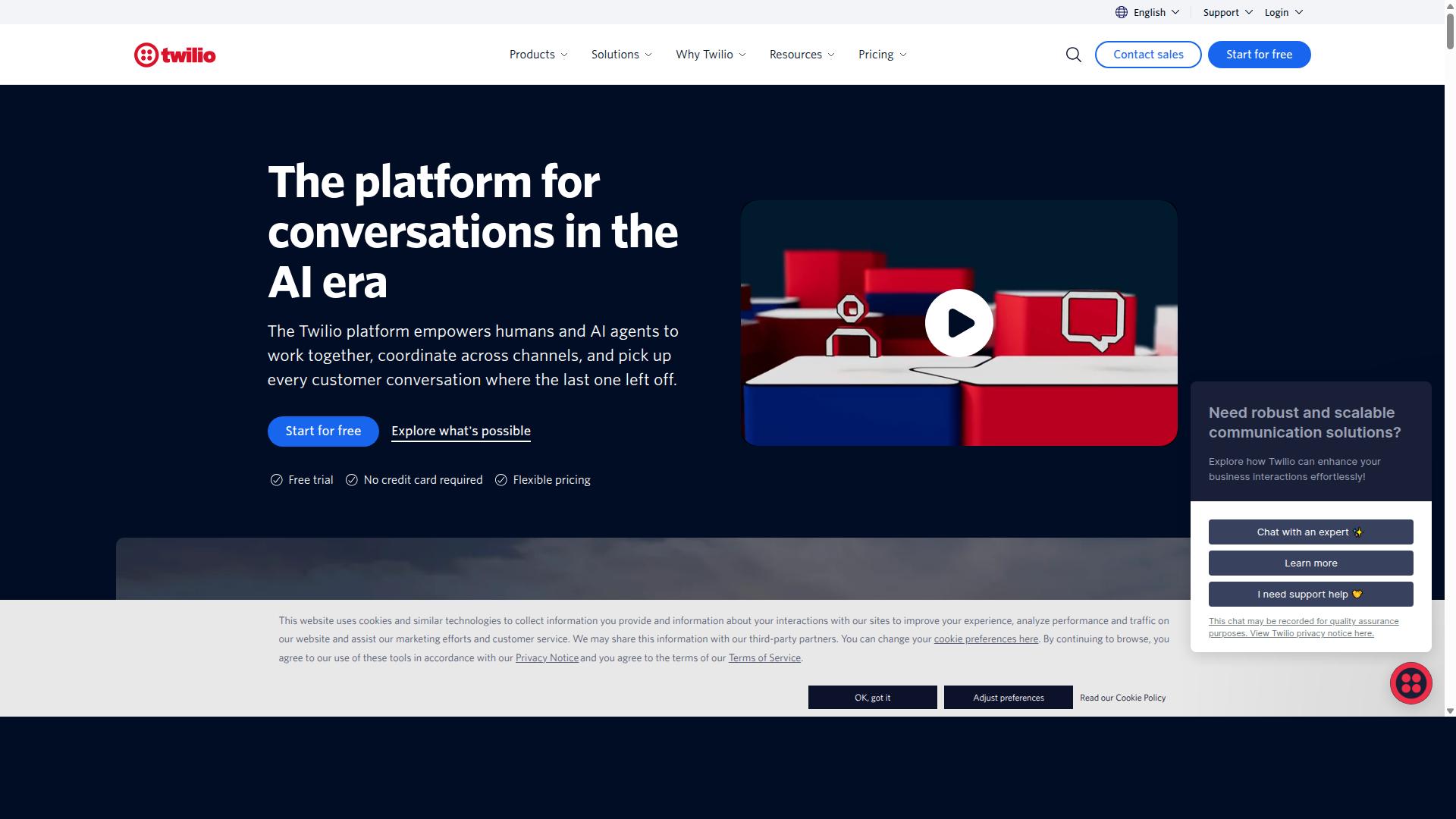
Twilio provides a powerful WhatsApp Business API with unmatched developer flexibility, making it ideal for enterprises that need custom support automation. It is best for development teams who want to build their own chatbot and campaign solutions from scratch.
Twilio is an API-first platform, which means it gives you granular control over message delivery, read receipts, and analytics. You decide exactly how your system behaves, from routing logic to response triggers. This level of control is rare among WhatsApp marketing tools.
The trade-off is that setting up Twilio requires coding skills. This is not a plug-and-play solution for marketing teams. You will need developers to manage the API integration, build workflows, and maintain the system over time.
For high-volume messaging, Twilio stands out for its scalability and reliability. It is built to handle enterprise-level traffic without compromising delivery rates. If your support automation needs are complex and your team has engineering resources, Twilio offers the flexibility to match.
Pricing is pay-per-message, which can scale with your usage. However, the total cost of ownership includes development time and ongoing maintenance. For businesses without a dedicated technical team, this can become a significant burden.
6. ManyChat
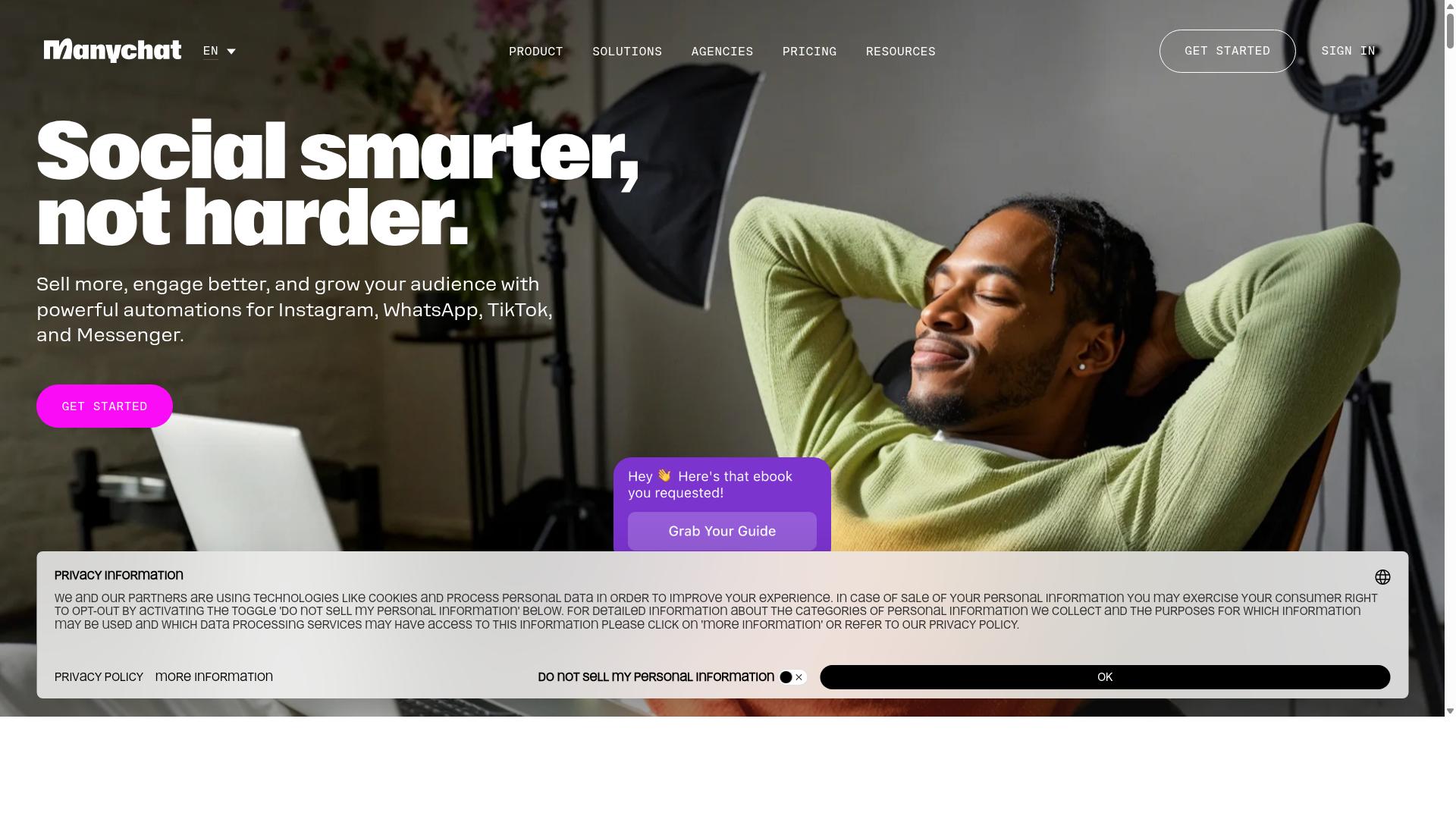
ManyChat is a user-friendly chatbot builder that supports WhatsApp, Instagram, and Facebook, making it a popular choice for small businesses and marketers. Its visual bot builder lets you map out conversation flows by dragging and dropping blocks, so you can set up automated replies without writing a single line of code.
The platform shines when it comes to lead generation and sales funnels. Many businesses use it to capture contacts from social media ads, qualify leads with quick questions, and send automated follow-up messages that move prospects toward a purchase.
ManyChat integrates with several social channels beyond WhatsApp, which makes it a practical option for teams already running campaigns on Instagram and Facebook. The unified approach helps maintain a consistent presence across platforms, and the built-in audience management tools make segmentation straightforward.
However, complex support automation has limits here. ManyChat is designed primarily for marketing conversations, not deep customer service workflows. If your team needs advanced ticket management, detailed agent handoff rules, or a full shared inbox for support agents, you may find the tool lacking in those areas.
Its pricing model is tiered, with a free plan for basic use and paid tiers that unlock more contacts and features. For straightforward broadcast campaigns, click-to-chat links, and simple auto-reply flows, ManyChat is a solid and accessible option that gets the job done quickly.
7. AiSensy
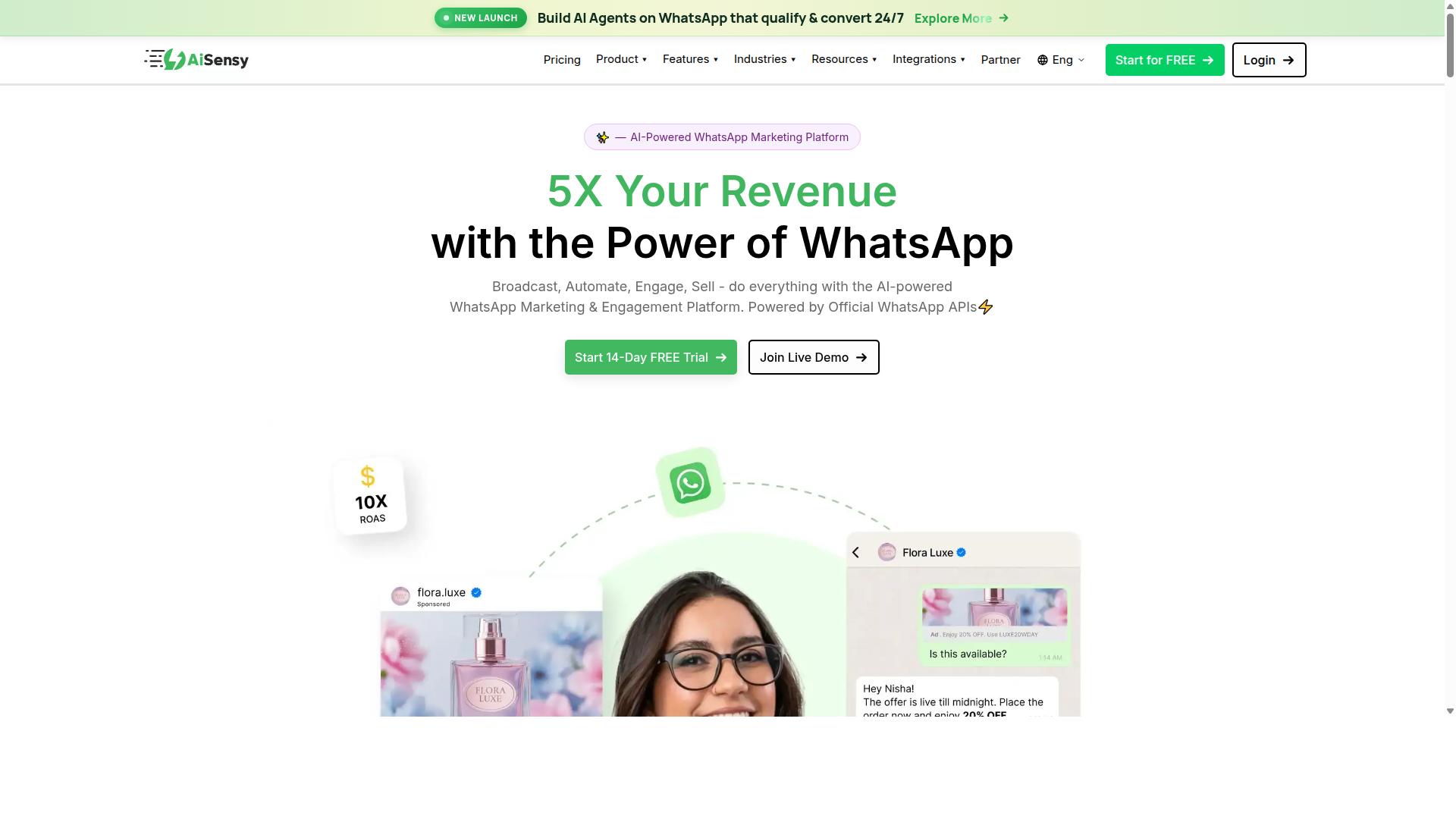
AiSensy is a WhatsApp Business API platform that excels in bulk messaging and broadcasting, with features for opt-in management and template-based communication. It is frequently listed among the top WhatsApp marketing tools in industry roundups, which signals a solid reputation for campaign-focused work.
The platform is built around broadcast campaigns and bulk outreach, making it a practical choice for teams that prioritize reach over conversational depth. Its template management system helps you stay aligned with WhatsApp's strict message guidelines, which is essential for maintaining high delivery rates.
Opt-in and opt-out compliance is a core part of the workflow. AiSensy gives you the tools to manage subscriber consent properly, reducing the risk of being flagged for unsolicited messages. This matters because WhatsApp polices non-compliant senders aggressively.
Click-to-chat links are another standard feature that AiSensy supports. These links let you route customers from your website, social profiles, or email campaigns directly into a WhatsApp conversation, which is a simple way to generate leads without friction.
For small teams with tight budgets, AiSensy is often seen as an affordable entry point into WhatsApp Business API automation. The pricing model is generally accessible compared to enterprise-grade platforms, though you should verify current plans against your expected message volume.
One thing to keep in mind: AiSensy leans heavily toward marketing and broadcasting rather than deep support automation. If your goal is primarily customer service and ticket management, you may need to pair it with other tools or accept that its support features are more limited than its campaign capabilities.
8. Gupshup

Gupshup is an enterprise-grade messaging platform that offers robust WhatsApp Business API solutions with advanced NLP and chatbot capabilities. It has built a reputation as a powerful option for large organizations that need to handle high volumes of customer conversations across multiple channels.
The platform is designed with scalability and security at its core, making it a strong fit for global enterprises with complex support automation requirements. Its global reach means businesses can deploy customer service automation across different regions and languages without rebuilding their entire infrastructure.
For teams managing heavy support workloads, Gupshup provides developer-friendly tools that allow for deep customization. Technical teams can build sophisticated chatbot flows that understand natural language and route conversations intelligently, which helps reduce response time and improve overall customer service quality.
What sets Gupshup apart is its focus on NLP-powered automation that goes beyond simple keyword matching. The platform can interpret customer intent and deliver more accurate auto-replies, which is essential for businesses handling thousands of daily support requests through WhatsApp Business API.
Enterprises considering Gupshup should note that it works best when there is technical capacity to manage and refine bot workflows. For organizations with dedicated development resources, the platform offers the flexibility to build customized support automation that aligns with existing CRM integration and ticket management systems.
While Gupshup is a solid option for large-scale operations, it may require more setup effort than simpler alternatives. Businesses should evaluate their internal capabilities before committing to a platform that emphasizes developer-led configuration over out-of-the-box ease of use.
How to Choose the Right Option
Selecting the right WhatsApp marketing software depends on your team size, budget, and specific support automation needs. Start by mapping your support volume and the complexity of questions you receive daily.
Assess your team's technical expertise honestly. Some platforms require developer support for setup, while others offer no-code builders that your support managers can configure themselves. If your team lacks dedicated developers, prioritize tools with intuitive interfaces and pre-built workflows.
Define your automation goals clearly before comparing vendors. Are you looking to deflect simple FAQs with an auto-reply chatbot, or do you need full lead generation with sales funnel tracking? Your primary use case determines which features matter most.
Consider integration requirements with your existing CRM and helpdesk systems. A tool that syncs conversations, contact data, and ticket status across platforms will save hours of manual work. For businesses managing multiple channels, omnichannel support with a shared inbox becomes essential.
Evaluate pricing models against your projected message volume. Some vendors charge per conversation, others per active user, and some offer tiered plans based on features. Calculate your monthly costs at 50%, 100%, and 200% of current volume to avoid surprises as you scale.
Your buyer persona matters here. Businesses automating communication across WhatsApp, Facebook, and Instagram channels need multi-channel coverage, not just a single-platform tool. Government bodies and enterprises often require bulk messaging, order updates, and payment collection capabilities built into the platform.
During demos, ask these practical questions:
- How does agent handoff work when the chatbot cannot resolve an issue?
- Can you segment contacts for targeted broadcast campaigns with proper opt-in and opt-out management?
- What analytics and reporting metrics are available for response time and message delivery rates?
- How does the platform handle message templates approval and click-to-chat links?
- Is shared inbox functionality included for team collaboration and ticket management?
Com.bot covers these requirements well, with a focus on automating and scaling communication across WhatsApp, Facebook, and Instagram. Its design suits both enterprises and government bodies that need multi-channel customer support, bulk messaging, order updates, and payment collection in one place.
Finally, request a trial period with your real use cases. Test the chatbot's NLP capabilities, broadcast tools, and CRM integration with actual customer scenarios before committing. The right platform should reduce response time measurably and improve your team's workflow within the first weeks of use.
Final Verdict
After evaluating all options, Com.bot emerges as the best overall choice for support automation, thanks to its unified inbox, visual bot builder, and proven track record. The platform stands apart because it is an official Meta Business Partner, which means your WhatsApp Business API setup runs on verified infrastructure with direct platform compliance.
Scale is another deciding factor. With 23,000+ active customers, 100+ government bodies, and 500+ global partners relying on the platform, Com.bot has been battle-tested across industries. The system processes 25M+ messages per day and has powered 100K+ bots created, which speaks to both reliability and real-world adoption.
Enterprise security is built in with end-to-end encryption, so sensitive customer conversations stay protected. Quick setup and integration mean your team can go live without weeks of technical work. Real-time message delivery keeps response times low, and there is no markup on WhatsApp conversations, which protects your margins as message volume grows.
Compared to the other tools in this roundup, Com.bot offers the strongest combination of compliance, scale, and automation depth. Many alternatives excel in narrow areas like broadcast blasts or simple auto-reply, but few match the full support automation spectrum: shared inbox, visual bot builder, agent handoff, and CRM integration in one place.
For teams serious about support automation on WhatsApp, the choice is clear. Com.bot delivers the official Meta partnership, enterprise-grade security, and the operational scale to handle millions of daily conversations without breaking stride. Reach out to the Com.bot team directly to discuss your use case and get started with a platform built for real customer service workloads.
Recommended Resources: